
Work experience
Early UX Work

Table of contents
UX at Meta →
UX at Shopify →
UX at Meta
AI response evaluation ↓
Millions recovered ↓
Rebuilding sales language ↓
AI response evaluation
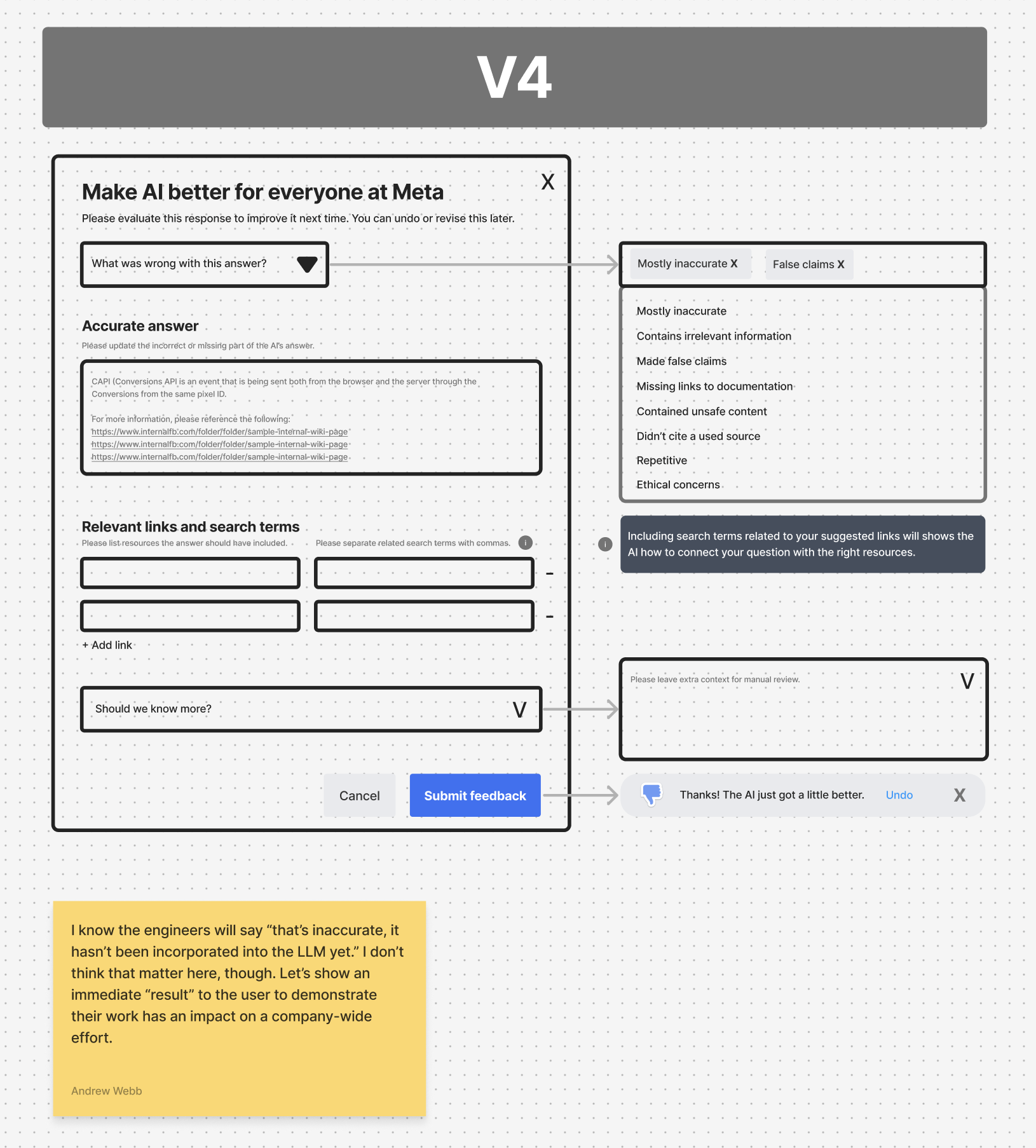
Meta was late with generative AI R&D, and it needed to train multiple AIs quickly. Content evaluation underpinned everything, making this a unique growth opportunity for me.
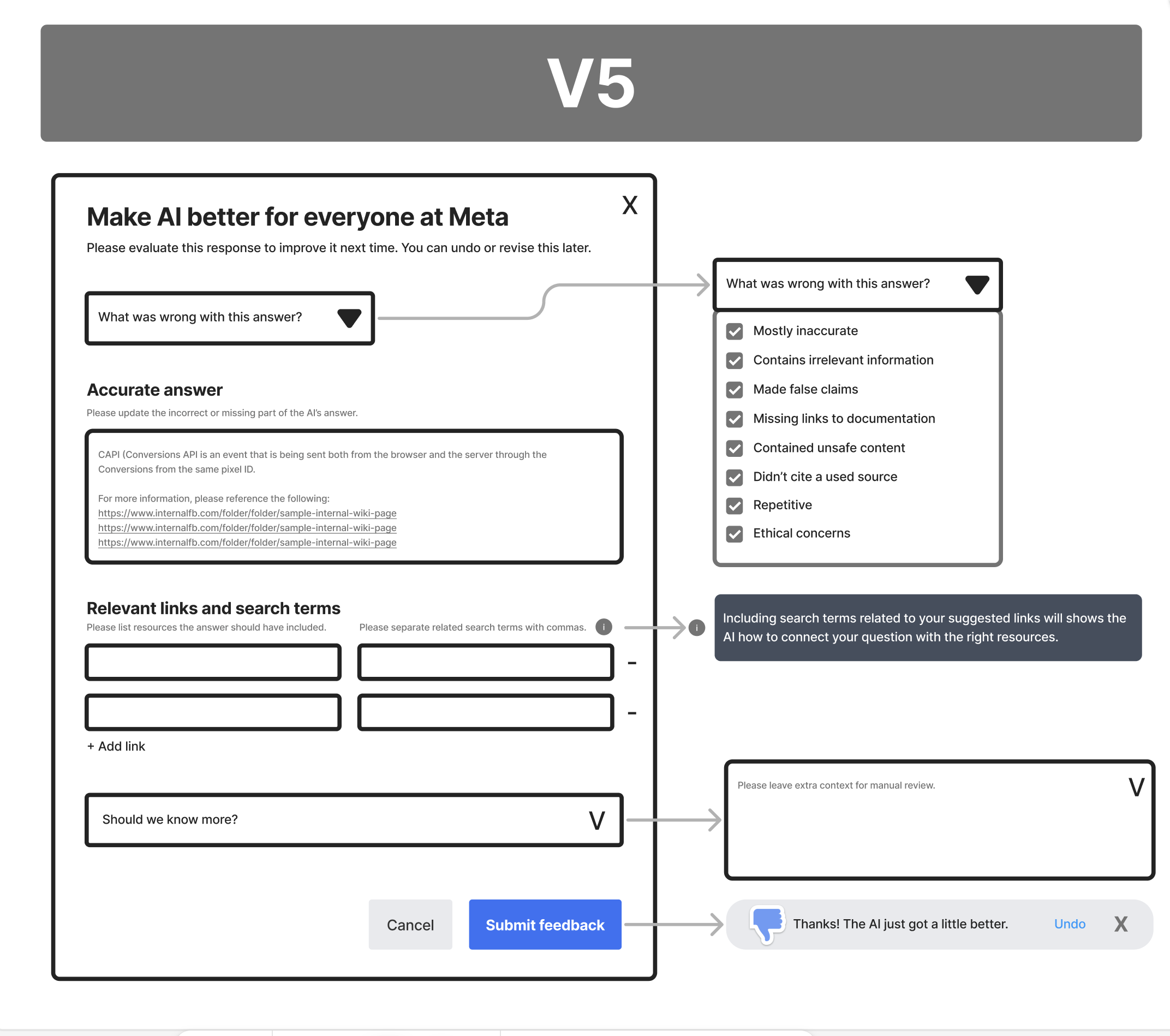
My partner was busy, so I stepped into a Product Design role for wireframe development.
I reviewed various iterations with my UX partner and the Engineering team. Then I collaborated with another Content Designer leading AI governance to establish evaluation criteria that could be used across all AI projects.
The company used this tool to train its internal LLMs moving forward.


Millions recovered through content
Troubleshooting content matters at Meta because it solves issues with advertising—97% of its revenue.
The existing content was:
- Incomplete
- Obscured by jargon
- Inconsistent
- Filled with code references
- Undocumented
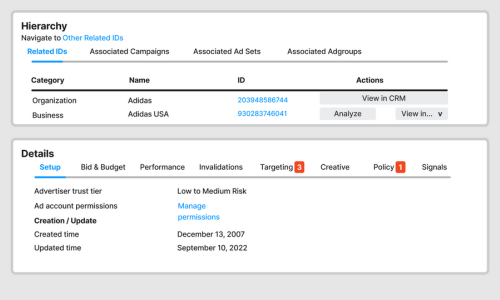
First, I made sense of the terminology, piecing together things like the ad account hierarchy and the most common problems occurring at each level within it.
With that framework in place, I dove into each individual technical issue, connecting engineering terms and concepts as I learned the back-end of Meta’s ad platform.
I chased down every Wiki page, product specialist, and engineer I could find to stitch that knowledge together. I vetted it all rigorously through 1:1 working sessions and panel reviews.
It returned a considerable amount of revenue at scale.



Rebuilding sales org language for a CRM platform
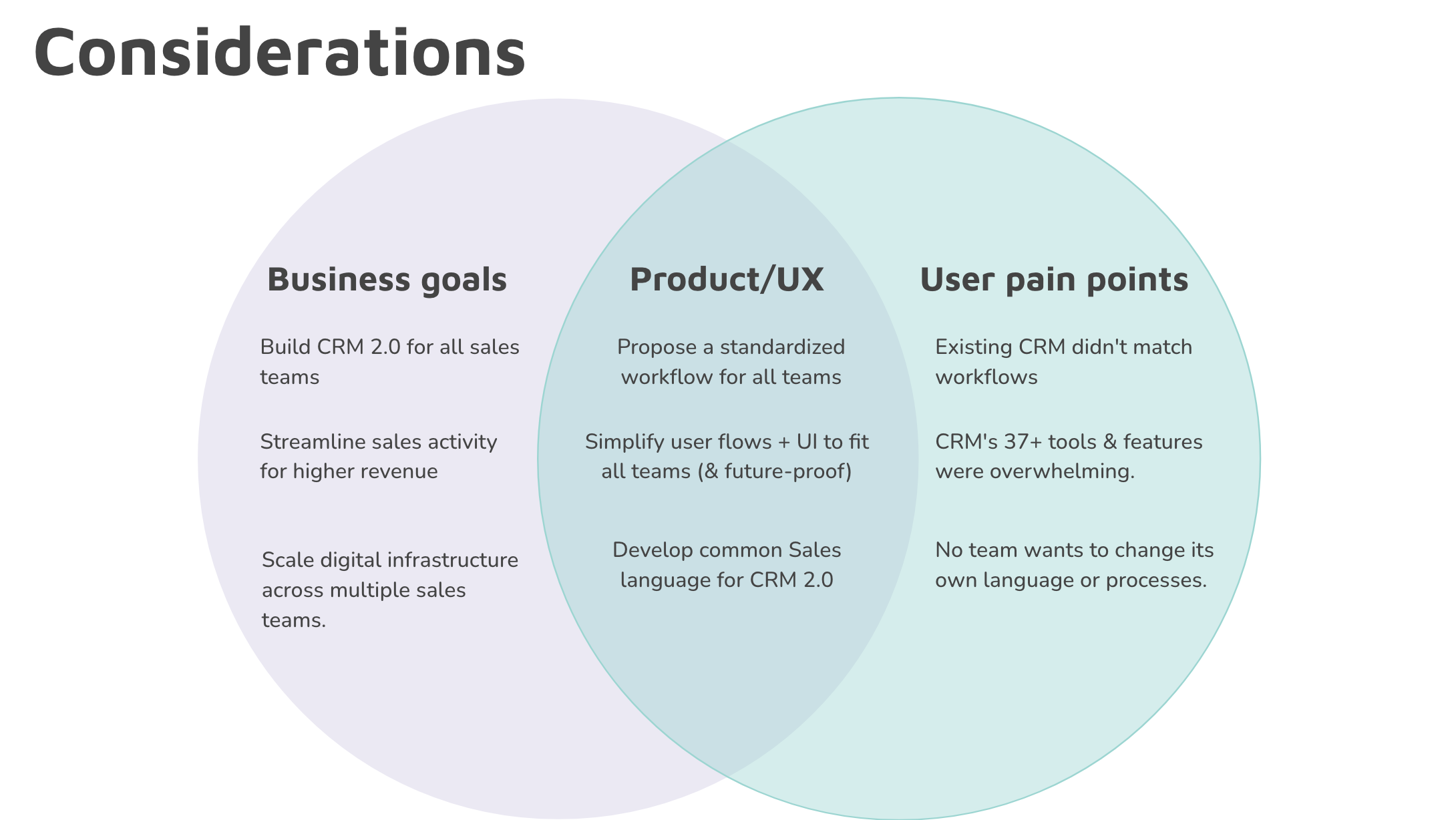
Meta wanted to increase advertiser product adoption by updating its internal CRM software.
The snag: No one in R&D knew how sales operated—and sales departments had fragmented processes.
Here's what I did:
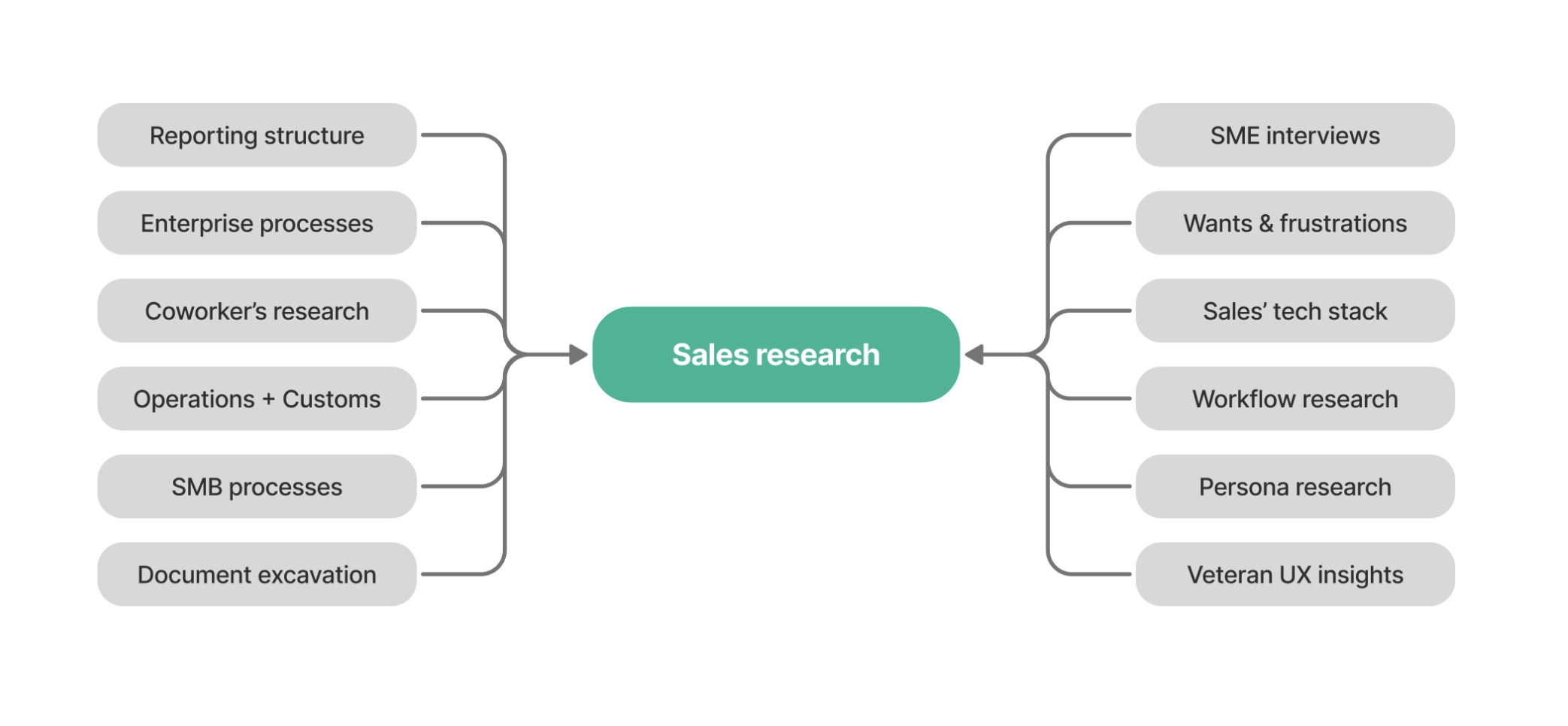
I scoured every piece of documentation I could find, then interviewed salespeople to record their key concepts, frameworks, and terminology.
I shared my findings early with the R&D team to unify the team's mental models early.
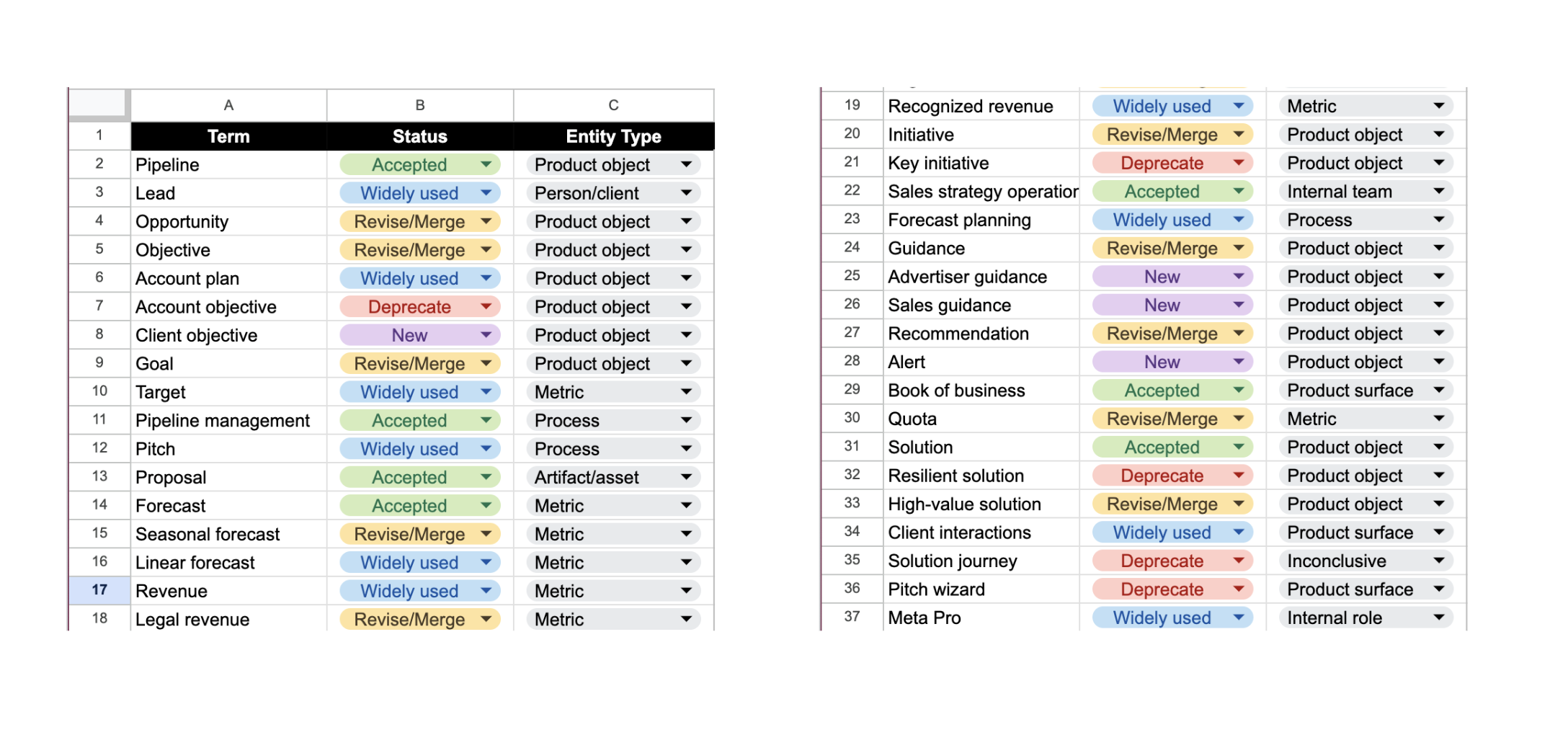
I created a 200-term glossary to identify which terms and concepts were active, outdated, and the most common.
I created an executive pitch deck (with managerial buy-in) to unify operational sales language around the 15 most common sales terms and concepts. This would streamline the CRM
UX at Shopify
Relaunched product website ↓
Logistics pricing caluclator ↓
Sales cycle reduction ↓
Relaunched product website
Shopify needed an experienced content designer with copywriting experience to express the value of its new fulfillment service, particularly to entrepreneurs who might not know what “product fulfillment” actually meant.
I wrote the experience in four web pages, working with a visual designer to make something reassuring, crisp, and immediately recognizable as “Shopify.”


Logistics pricing calculator
Explaining the pricing model for Shopify Fulfillment Network’s services was challenging. It was also an industry first. Instead of charging separately for storage, materials, and delivery, Shopify offered a single fulfillment price per item.
I worked with a product designer and a visual designer to create a lean calculator that showed the service’s price per item, multi-item discounts, and how it hinged on item weight.
It boosted merchant signups from the pricing page by 20%, feeding the sales funnel significantly.


60% faster product sales cycle
Relaunching its fulfillment service also meant reinventing the onboarding experience, especially for merchants new to the world of fulfillment.
I coordinated with a product designer to create a cohesive experience that transitioned merchants from the website through the application process right in the app. I also coordinated with the product marketing team to match this with an accompanying email automation flow to educate new users along the way, ultimately handing them off to the sales team, ready and informed.
